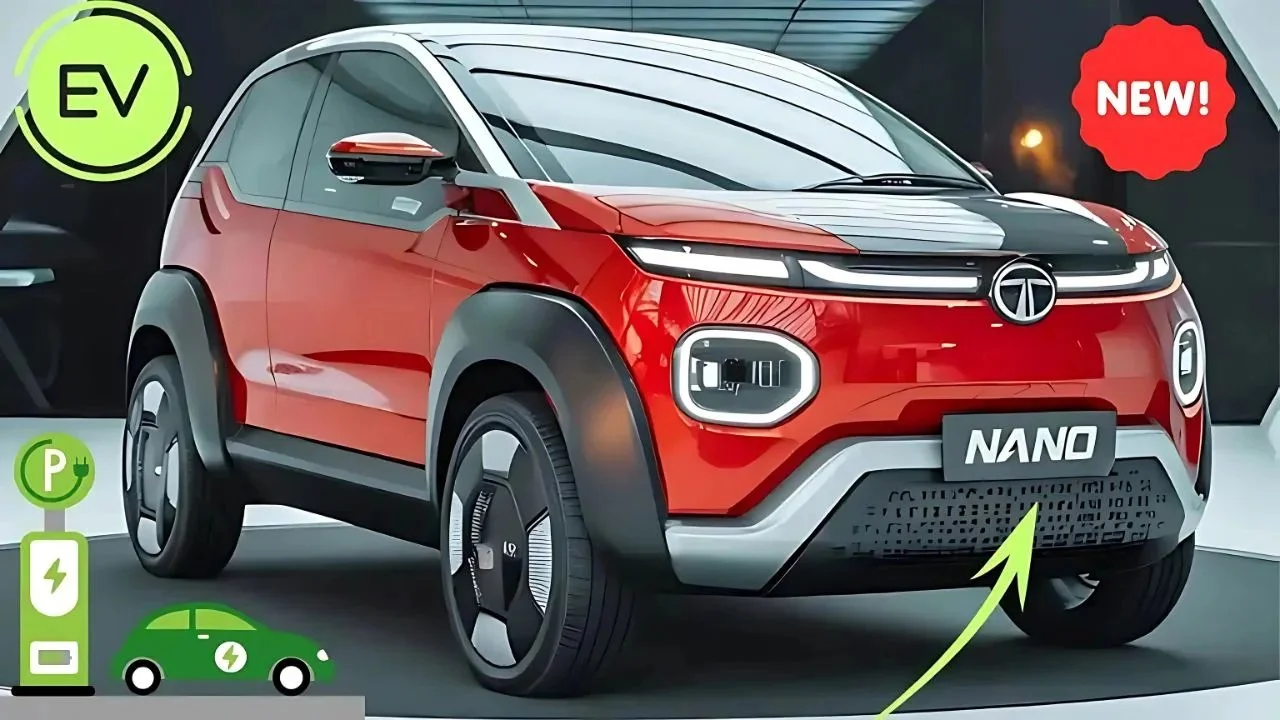
Tata Nano Electric 2026 Unveiled : The Tata Nano, once celebrated as India’s most affordable car, is now set for a futuristic electric comeback. The upcoming Tata Nano Electric 2026 is generating massive excitement due to its expected 460 km range, advanced safety features, and extremely fast charging capability. As Indian roads become busier and fuel prices continue to rise, a compact, efficient, and budget-friendly electric car like the Nano EV could be a breakthrough for daily commuters. The new Nano is also expected to maintain its identity as a people’s car while offering modern technology and premium upgrades that were missing in the earlier model.
Introduction – The Return of an Icon
The design of the Tata Nano Electric 2026 is expected to be significantly modernized, giving it a fresh and futuristic appearance. Reports suggest that the car may feature LED headlamps, a redesigned bumper, a closed front grille suitable for EVs, and stylish LED tail lamps. Although it will retain its compact structure—perfect for crowded city roads—its overall look is expected to be more appealing to young buyers. Interiors may also see improvements, including better materials, comfortable seating, and a more user-friendly layout. Together, these changes will give the Nano EV a contemporary feel that matches today’s automotive trends.
Modern and Futuristic Design
The biggest highlight of the Nano Electric is the claimed 460 km range, which is impressive for a budget EV. If this becomes a reality, the car could easily outperform many existing competitors. Such a long range suggests the use of a 40–45 kWh lithium-ion battery pack designed for efficiency and long life. Along with this, the Nano EV is expected to deliver smooth, silent performance with instant torque—an advantage of electric motors. This will make city driving easier, especially during stop-and-go traffic. Even though the Nano is small in size, the performance will likely be powerful enough for daily traveling and short highway trips.
Battery Capacity and Performance
Another major attraction is the expected 35-minute DC fast charging facility, which can charge the battery from 10% to 80% in a very short time. This makes it extremely convenient for users who need quick top-ups during the day. Fast charging is still uncommon in low-cost electric cars, so this feature could give the Nano EV a strong advantage in the market. For home charging, the EV might take 5–7 hours using a regular AC charger, ideal for overnight charging. This combination of fast and home charging ensures convenience and flexibility for all types of drivers, especially those living in cities.
35-Minute Fast Charging Technology
Safety is expected to be greatly improved in the Nano Electric 2026. The car is likely to include dual airbags, ABS with EBD, rear parking sensors, and hill-hold assist, making it much safer than the original Nano. With increasing safety awareness and stricter regulations in India, these upgrades will give drivers more confidence on the road. Tata may also enhance the build quality with a stronger body frame to offer better crash protection. This is important because small cars often face concerns regarding safety, and these additions could help change that perception.
Safety and Protection Features
Inside the Nano EV, the cabin is expected to feature modern technology like a 7-inch touchscreen, a digital instrument cluster, Bluetooth connectivity, USB charging ports, and smartphone support via Android Auto and Apple CarPlay. These features will offer a premium experience despite the car’s affordable price. Tata may also offer connected-car features to help users monitor charging status, battery health, and driving patterns. With such tech upgrades, the Nano EV will become an ideal choice for students, young professionals, and families looking for a smart, compact EV.
Interior Features and Smart Technology
The expected price of the Nano Electric 2026 may start around ₹4.49 lakh, which would make it one of the most affordable electric cars in India. EMI plans may begin from ₹3,990 per month, making it accessible to first-time car buyers and those looking to switch to electric mobility. If Tata delivers these features at this price, the Nano EV could disrupt the electric vehicle market and inspire millions of budget-conscious buyers to adopt EVs. With rising fuel costs and increasing environmental awareness, the Nano Electric 2026 could emerge as the perfect solution for economical and eco-friendly city travel.